

GOING GREEN – May 2026

If you are at all concerned about the quantity and toxicity of chemicals that are a feature of modern life, you may be interested in listening to the BBC Radio 4 programme “Toxic”. Materials scientist Mark Miodownik asked various scientists to measure his home for PFAS – known as ‘forever chemicals’, and the results were staggering.
Greener Henley are promoting Pledges for the Planet asking people to make small changes that have an accumulative effect of making a big difference to our lives and environment. One of the Pledges is to Use Eco-Friendly Products. I asked my friend Jean Oliver for advice on natural cleaning products and I thought I would share her very useful tips.
Reducing Toxic Load in Our Homes and Our Environment
Each spring, many of us feel the natural urge to throw open the windows, clear out the clutter, and give our homes a thorough clean. It’s a season of renewal, but also an opportunity to reflect on how we clean and the wider impact those choices have.
As a GAPS coach, I support individuals in improving their health through the Gut and Psychology/Physiology Syndrome (GAPS) approach, which focuses on gut health, reducing toxic load, and supporting the body’s natural ability to heal. A key part of this work involves reducing the everyday “toxic load” from the foods we eat, the products we use and the environments we live in — recognising that what surrounds us plays a significant role in how we feel.
Many conventional cleaning products contain synthetic chemicals and fragrances that don’t simply disappear after use. They contribute to the burden our bodies must process daily and, once washed down the drain, can find their way into our waterways — affecting wildlife and the wider ecosystem.
From a GAPS perspective, reducing unnecessary chemical exposure is an important step in supporting overall health, and this in turn helps the environment. Our homes should be places of rest, repair, and nourishment, not environments filled with irritants that place additional strain on the body.
The encouraging news is that a clean, fresh home doesn’t require a cupboard full of expensive, chemical-laden products. In fact, some of the most effective cleaning agents are simple, time-tested, and often already sitting in our kitchens.
By returning to these natural alternatives, we can:
- Reduce the chemical burden on our bodies
- Save money on household cleaning products
- Protect rivers, wildlife and soil health
- Create a healthier indoor environment for our families
Perhaps most importantly, this approach reminds us that cleaning doesn’t need to be complicated. Simplicity is not only effective — it’s sustainable. A small collection of natural ingredients, a few well-chosen tools and a little gentle effort is often all that’s needed to keep a home beautifully clean.
_________________________________________________________________________________________________
A Simple Non-Toxic Cleaning Toolkit
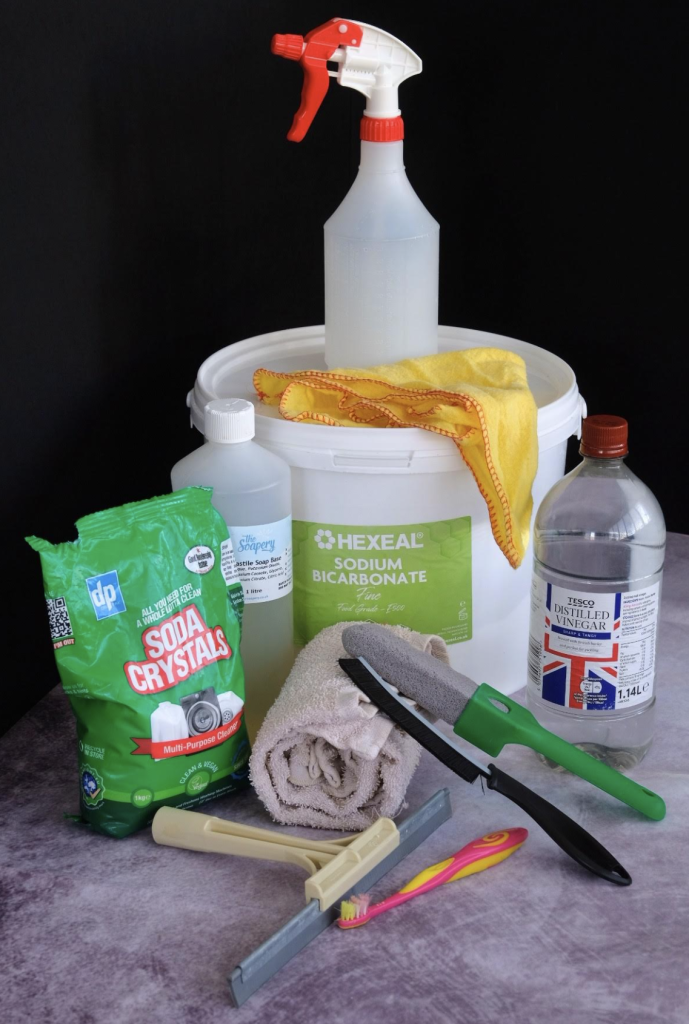
A natural cleaning cupboard is refreshingly simple and highly effective.
Soda Crystals
A biodegradable cleaning agent made from salt and limestone. Affordable and widely available, they are incredibly versatile — ideal for degreasing, softening water, and general cleaning.
Bicarbonate of Soda
A gentle abrasive and natural deodoriser that neutralises odours rather than masking them. Its mild alkalinity helps lift grease and stains, making it especially useful in kitchens and on food preparation surfaces.
White Vinegar
Produced through fermentation, white vinegar contains acetic acid, which cuts through grease, dissolves limescale and helps break down soap scum — making it particularly useful in hard water areas like Henley and the surrounding area.
Distilled Water
Free from minerals such as calcium and magnesium, distilled water prevents streaking and residue, making it ideal for glass, mirrors, and finishing touches.
Castile Liquid Soap
A concentrated, plant-based soap traditionally made from olive or coconut oil. Gentle, biodegradable and highly versatile, it can be used for floors, dishes, laundry, and general surfaces.
Antimicrobial Essential Oils
Oils such as tea tree, eucalyptus, lemon, lavender, oregano and rosemary offer natural antibacterial properties, alongside a fresh, uplifting scent — without synthetic fragrances.
_________________________________________________________________________________________________
Simple, Sustainable Cleaning Tools
Often, the most eco-friendly option is to use what we already have:
- Repurposed cloths (old tea towels or worn garments)
- Old toothbrushes for detailed cleaning
- A small scraper for stubborn residue
- A pumice stone for limescale build-up
- A crevice brush for hard-to-reach areas
- Reused spray bottles
- A window squeegee for streak-free glass
- Natural loofahs or compostable sponges (avoiding microplastics)
And, of course — a little elbow grease (just a smidge!).
_________________________________________________________________________________________________
Simple Recipes & Techniques
All-Purpose Cleaner
In a spray bottle, combine:
- 1 part distilled water
- 1 part white vinegar
- 2–3 drops Castile liquid soap
- 20–30 drops essential oil
Shake gently before use. This makes a simple, effective cleaner suitable for most surfaces in the home (avoid natural stone such as marble).
Tackling Limescale (Hard Water Areas)
Limescale can be particularly stubborn, but it can be removed effectively without harsh chemicals.
Sprinkle bicarbonate of soda onto the affected area, then spray with white vinegar. Allow it to fizz and soften deposits for at least 30 minutes (or longer for heavier build-up). Gently remove using a scraper or pumice tool, then rinse clean.
Freshening Taps
Limescale often builds up around tap openings.
Fill a small cloth or bag with bicarbonate of soda and tie it around the end of the tap. Spray with vinegar and leave overnight if possible. Remove and gently clean away the softened limescale.
Shower Screens
Water droplets left on shower screens can quickly lead to limescale build-up.
Spray white vinegar onto the glass and use a cloth or natural loofah to wipe in circular motions. The mild abrasiveness combined with the vinegar helps lift residue. Rinse or spray with distilled water and finish with a squeegee.
For more stubborn build-up, bicarbonate of soda can be added to your cloth before wiping, or a scraper can be used carefully.
Regular maintenance makes all the difference.
Bathroom & General Cleaning
Dissolve half a cup of soda crystals in approximately one litre of hot water. Use this solution across baths, sinks, tiles, shower screens, glass, and draining boards (avoiding aluminium surfaces).
Floor Cleaner
Add a couple of tablespoons of soda crystals or Castile liquid soap to a bucket of warm water (approximately 5–10 litres).
Optional: add 20–30 drops of essential oil for a naturally fresh scent.
A Gentler Way Forward
Cleaning in this way is not about perfection — it’s about intention. Small, mindful changes in our homes can have a meaningful impact on both our health and the environment.
By choosing simple, non-toxic methods, we reduce what enters our bodies, our homes, and ultimately our waterways. It’s a quiet but powerful shift — one that supports not only our own wellbeing, but the health of the world around us.
Perhaps this is what spring cleaning is truly about: not just clearing our homes, but lightening our overall load — inside and out. In doing so, we also play our part in supporting the wider work of Greener Henley, helping to protect and preserve the natural environment for generations to come.
If you feel inspired to explore this way of cleaning further, you’re very welcome to visit my website, where I share more detailed recipes and simple guidance: www.gapsdietuk.com
Photography by Nicholas Turner
