

Flooding in Henley: Prevent, Prepare, Respond, Recover
In just 25 years, 1 in 4 properties in England will be at risk of flooding.
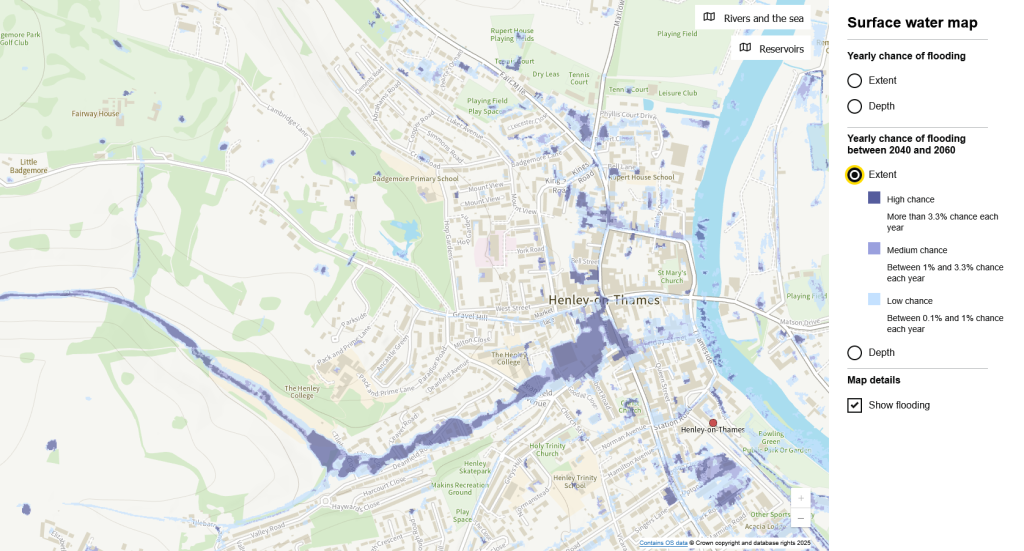
To help bring this quite shocking statistic to life, the image below, taken from the Environment Agency’s Long Term Flood Risk Map, shows the projected likelihood of flooding in Henley between 2040 (that’s only 15 years from now) and 2060, with many areas of central Henley marked as having a high annual chance of flooding (over 3.3%).
Take The Pledge
Help our community together take action to reduce our collective flood risk. Let’s join forces and take the pledge to BE FLOOD READY!
The rising risk of flash flooding
Contrary to popular belief, flooding is not just an issue for homes, schools and businesses adjacent to the river – flash flooding from sudden and intense rainfall can strike anywhere with little-to-no warning. “Flash floods are often highly localised and tricky to accurately forecast – your house or road can be flooded whilst your neighbours remain safe and dry. Living on a hill, or away from a river doesn’t mean you can’t be flooded by surface water… and it can happen within minutes” says Dr Jess Neumann, an expert in flood risk management and community preparedness from the University of Reading.
“We have spoken many times with local people who did not think they would ever be at risk of flash flooding, then found themselves flooded. If people don’t think they are at risk, then they don’t prepare and it takes them by surprise.”
Dr Jess Neumann, University of Reading.
What can I do to be prepared and lower my flood risk?
Taking steps to be flood ready reduces the risk to lives and property in the event of a flood, as well as the likelihood of flood occurring.
-
Check your property’s flood risk by looking at the Environment Agency’s long term flood risk map (Look at both “Rivers and Sea Map” & “Surface Water Map”, then click on ‘Yearly chance of flooding between 2040 and 2060’, select ‘Extent’)
-
Tell others about the flood risk map and get them to check their risk too
-
Sign up for Environment Agency flood alerts (not for flash flooding)
-
Check your insurance for flood risk cover
-
Install or invest in property-level protection (e.g. barriers, flood doors, air brick covers, non-return valves, flood resistant flooring)
-
Perform periodic home drainage maintenance (e.g. install and empty water butts, clear and fix gutters and outside drains)
-
Prepare a flood plan (evacuation routes, emergency contact details, location of flood kit, utility shutoff instructions)
-
Prepare a flood kit / grab bag (insurance papers, bottled water, first-aid kit, prescription medication, torch and batteries, spare chargers and battery pack)
How can I help prevent flooding and the damage it causes?
There are simple steps we can all take that help reduce the likelihood of flood occurring – not least of which is reducing the amount of concrete and non-permeable surfaces around us. Breaking these surfaces up – even by just pulling up a couple of paving stones – can hugely increase the potential drainage of water, as can planting trees, rain gardens and green roofs. Increased rainfall doesn’t just cause water to rise – it also flushes pollutants and untreated sewage into our rivers, threatening the health of the river ecosystem and our health too, but there are things we can do to minimise this.
-
Invest in green-infrastructure (e.g. permeable driveways, rain gardens, green roofs)
-
Reduce household/garden pollutants (e.g. pesticides, cleaning products that are harmful to nature)
-
Dispose of fats, oils and wipes properly